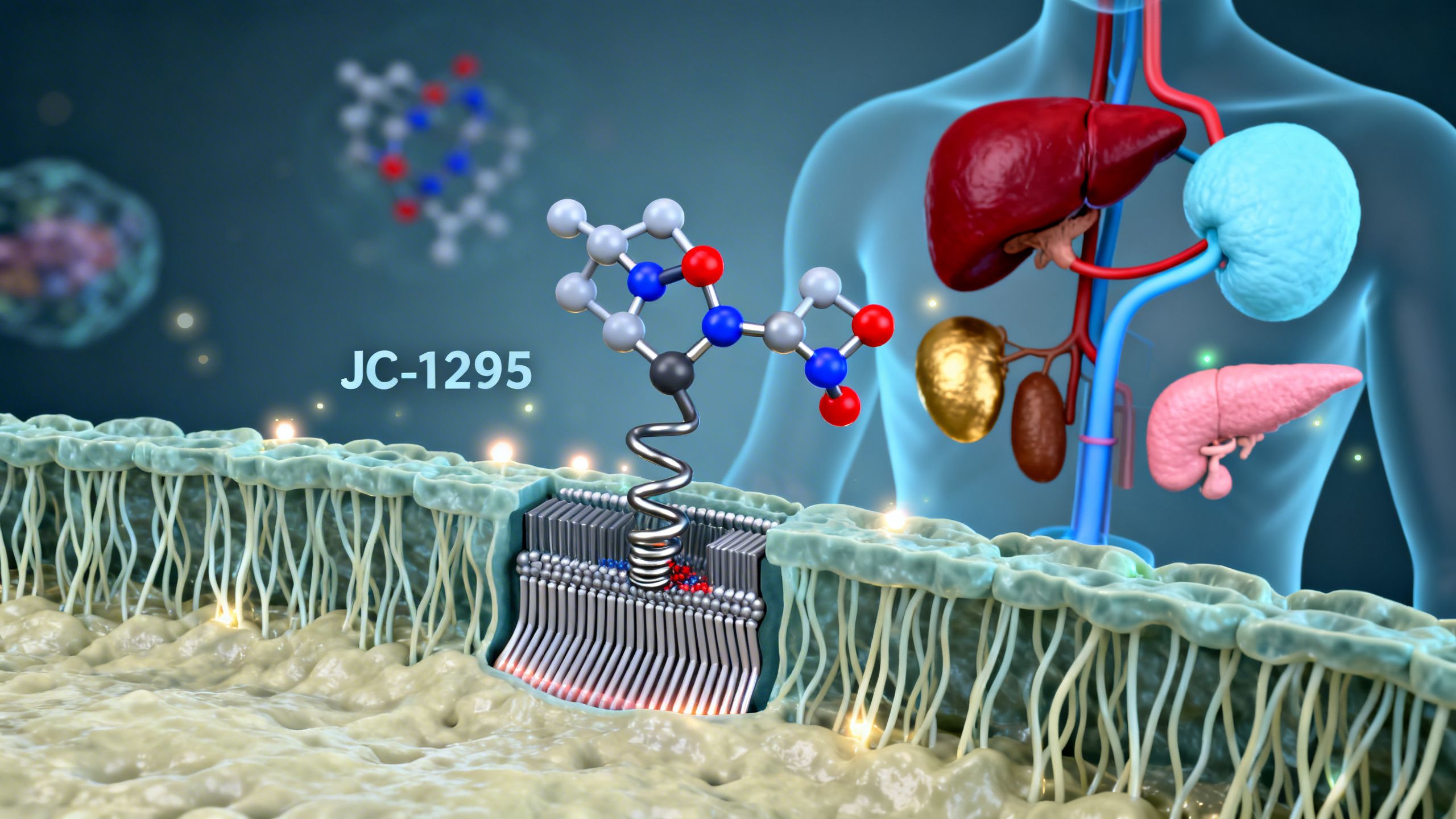

In the complex world of endocrinology and human performance, the growth hormone (GH) axis stands as a central pillar governing growth, metabolism, and tissue repair. As we age, the vitality of this system naturally wanes, contributing to changes in body composition, reduced recovery capacity, and a decline in overall physical function. In the scientific pursuit of ways to support this crucial axis, researchers have developed various compounds, including the experimental peptide known as CJC-1295.
CJC-1295 is a synthetic, long-acting analog of Growth Hormone-Releasing Hormone (GHRH). It is not a form of synthetic growth hormone itself, but rather a substance designed to stimulate the body’s own pituitary gland to produce and release GH. This distinction is critical and forms the basis of its research appeal. This article provides a comprehensive, evidence-based examination of CJC-1295, delving into its mechanism of action, the existing human clinical data, its potential applications in areas like muscle recovery, and the significant safety considerations that must accompany its study.
Understanding the Growth Hormone Axis
To appreciate how CJC-1295 functions, one must first understand the system it influences: the hypothalamic-pituitary-somatotropic axis. This intricate hormonal cascade is the body’s natural engine for producing growth hormone.
- The Hypothalamus: This region of the brain acts as the control center. It produces GHRH, the primary signal to release growth hormone, and somatostatin, the primary signal to inhibit it.
- The Pituitary Gland: GHRH travels from the hypothalamus to the anterior pituitary gland, where it binds to specific receptors. This binding triggers the synthesis and release of growth hormone into the bloodstream.
- Growth Hormone (GH): GH then circulates throughout the body, exerting some direct effects on tissues. However, its main role is to travel to the liver and other peripheral tissues, stimulating them to produce Insulin-like Growth Factor 1 (IGF-1).
- Insulin-like Growth Factor 1 (IGF-1): IGF-1 is the primary mediator of most of GH’s anabolic (growth-promoting) effects, including muscle protein synthesis, cell proliferation, and tissue repair.
This system operates in a pulsatile fashion, meaning GH is released in bursts, primarily during deep, slow-wave sleep. The balance between GHRH and somatostatin dictates the timing and amplitude of these pulses. With age, a phenomenon known as somatopause occurs, characterized by a reduction in the amplitude of GH pulses and a subsequent decline in circulating IGF-1 levels. This decline is closely linked to sarcopenia (age-related muscle loss) and challenges in muscle maintenance in aging.
What is CJC-1295? A Detailed Look
CJC-1295 is a synthetic peptide, a chain of 29 amino acids that mimics the structure and function of endogenous GHRH. Its design, however, includes specific modifications intended to overcome the primary limitation of natural GHRH: an extremely short half-life of only a few minutes. These modifications are what define the two primary forms of this compound.
The Key Difference: CJC-1295 With and Without DAC
The most significant feature distinguishing versions of this peptide is the presence or absence of a technology called Drug Affinity Complex (DAC). This distinction fundamentally alters the compound’s behavior in the body and is a critical point of discussion in the context of CJC-1295 vs no DAC.
- CJC-1295 without DAC (also known as Modified GRF 1-29 or Sermorelin): This version is a modified chain of the first 29 amino acids of GHRH. The modifications provide resistance to enzymatic degradation, extending its half-life to about 30 minutes. When administered, it produces a short, sharp pulse of GH, more closely mimicking the body’s natural pulsatile release. It is often used in research in combination with a GHRP to create a strong, synergistic pulse.
- CJC-1295 with DAC: This version has the DAC component covalently bonded to the peptide chain. The DAC technology allows the peptide to bind to albumin, a major protein in blood plasma. This binding protects the peptide from rapid clearance and degradation, dramatically extending its half-life to approximately 8 days. Instead of a short pulse, it creates a sustained elevation, or “bleed,” of GH and IGF-1 levels over many days.
This difference is paramount. The short-acting version (Mod GRF 1-29) aims to amplify the body’s natural rhythm, while the long-acting version (CJC-1295 with DAC) aims to create a new, elevated baseline of GH and IGF-1.
Mechanism of Action: How CJC-1295 Works
The mechanism of CJC-1295 is both direct and elegant. It functions by binding to and activating the GHRH receptors located on the somatotroph cells of the anterior pituitary gland. This is the same receptor that the body’s own GHRH uses.
By activating this receptor, CJC-1295 signals the pituitary gland to increase the production and subsequent release of its stored growth hormone. This process respects the body’s own regulatory feedback loops to a degree. For instance, high levels of IGF-1 can still trigger the hypothalamus to release somatostatin, which can partially inhibit further GH release from the pituitary. This is a key difference from administering exogenous recombinant human growth hormone (rHGH), which completely bypasses the pituitary, suppresses natural production, and disrupts the entire axis.
The long-acting nature of CJC-1295 with DAC results in a prolonged stimulation of the pituitary. Human studies have confirmed this leads to a sustained increase in both mean GH concentrations and, consequently, CJC-1295 and IGF-1 levels. While GH release remains somewhat pulsatile, the peaks are higher and the troughs (the periods between pulses) are significantly elevated, leading to a constant, around-the-clock increase in anabolic signaling.
Human Evidence for CJC-1295
While anecdotal reports about this peptide are widespread in fitness and anti-aging communities, it is crucial to ground our understanding in published human clinical data. The research, while limited, provides valuable insights into its physiological effects.
Effects on GH and IGF-1 Levels
The most robust human evidence for CJC-1295 confirms its potent ability to stimulate the GH axis. A landmark 2006 study by Teichman et al. administered single subcutaneous doses of CJC-1295 with DAC to healthy young men. The results were clear and dose-dependent:
- A single injection of CJC-1295 resulted in a sustained increase in plasma GH and IGF-1 levels.
- The effects were long-lasting, with IGF-1 levels remaining elevated for up to 14 days post-injection.
- The peptide was shown to increase the trough (baseline) and peak levels of GH released in pulses.
Another study by Ionescu and Frohman further explored the effects of multiple doses, confirming that CJC-1295 could effectively elevate GH and IGF-1 levels over extended periods. These findings unequivocally establish CJC-1295 as a powerful, long-acting growth hormone secretagogue in humans.
Potential for Muscle Recovery and Body Composition
The primary interest for many researchers is whether these hormonal changes translate into functional benefits, such as enhanced CJC-1295 for muscle recovery. The roles of GH and IGF-1 in muscle biology are well-established. They promote muscle protein synthesis, stimulate the proliferation of satellite cells (muscle stem cells), and aid in the repair of damaged tissue. Therefore, a sustained elevation of these hormones could theoretically create a more anabolic environment conducive to faster and more complete recovery from exercise-induced muscle damage.
However, it is critical to state that direct human evidence demonstrating that CJC-1295 improves muscle recovery, strength, or athletic performance in healthy individuals is currently lacking. The existing clinical trials focused on its endocrine effects (hormone levels) and safety, not on functional outcomes in an athletic context. The link is, at present, theoretical and based on the known downstream effects of GH and IGF-1. Any claims of proven muscle repair benefits are an extrapolation of its mechanism, not a conclusion from direct clinical trial data.
Impact on Sleep Quality
Another area of interest is CJC-1295 for sleep support. The majority of natural GH secretion occurs during slow-wave sleep (SWS), the deepest and most restorative stage of sleep. There is a bidirectional relationship between sleep and the GH axis. Poor sleep blunts GH release, and alterations in the GH axis can, in turn, affect sleep architecture.
Research on other GHRH analogs, such as Sermorelin, has suggested a potential to increase the amount of SWS in both younger and older adults. By stimulating the GHRH receptor, it’s plausible that CJC-1295 could have similar effects, potentially enhancing sleep quality. Improved sleep quality is intrinsically linked to better muscle recovery, hormonal regulation, and cognitive function. However, specific studies measuring the effects of CJC-1295 on sleep architecture are needed to confirm this hypothesis.

Safety Profile and Potential Side Effects of CJC-1295
No discussion of an experimental compound is complete without a thorough review of its safety. As a research compound, CJC-1295 use is confined to laboratory settings for a reason. The side effects observed in human clinical trials, while generally considered mild to moderate, warrant careful consideration.
Commonly reported CJC-1295 side effects include:
- Injection site reactions: This is the most frequent adverse event, manifesting as transient redness, pain, swelling, or itching at the injection site.
- Vasodilation effects: Some participants report temporary flushing, warmth, or mild headaches shortly after administration, likely due to the peptide’s effect on blood vessels.
- Water retention (edema): Elevated GH and IGF-1 levels can cause the kidneys to retain more sodium and water, leading to mild swelling, particularly in the hands and feet.
- Paresthesia: The water retention can sometimes lead to a feeling of numbness or tingling, similar to carpal tunnel syndrome, as fluid compresses nerves in the wrists.
Long-Term Safety Considerations
The more significant concerns revolve around the unknown consequences of long-term, sustained elevation of GH and IGF-1. These are potent growth factors, and their chronic elevation is not a natural physiological state.
- Insulin Resistance: Growth hormone is known to have a counter-regulatory effect on insulin. It can decrease glucose uptake by peripheral tissues, forcing the pancreas to produce more insulin to maintain normal blood sugar levels. While short-term studies on CJC-1295 showed only transient effects on glucose, the risk of developing insulin resistance or impaired glucose tolerance with long-term use is a major theoretical concern.
- Cancer Risk: IGF-1 is a powerful mitogen, meaning it stimulates cell division and inhibits apoptosis (programmed cell death). There is a long-standing concern in endocrinology that chronically elevated IGF-1 levels could potentially accelerate the growth of pre-existing, undiagnosed cancerous or pre-cancerous cells. This risk is theoretical and has not been demonstrated in CJC-1295 trials, but it remains a critical consideration for any compound that chronically elevates IGF-1.
- Pituitary Desensitization: The continuous stimulation of the GHRH receptor by a long-acting compound like CJC-1295 with DAC raises questions about potential receptor downregulation or desensitization over time. This could theoretically blunt the pituitary’s responsiveness, although this has not been proven in the limited human studies available.
- Regulatory Status: It must be unequivocally stated that CJC-1295 is an experimental compound. It is not approved by the U.S. Food and Drug Administration (FDA) or any other major global regulatory agency for human use. Its sale is intended for in-vitro research and laboratory purposes only. Sourcing such compounds from unregulated online vendors carries immense risks, including issues of purity, sterility, dosage accuracy, and the presence of contaminants.

CJC-1295 in Context: Comparison with Other Growth Hormone Secretagogues
CJC-1295 does not exist in a vacuum. It is part of a larger class of research peptides known as growth hormone secretagogues (GHS). Understanding its place among them provides valuable context.
CJC-1295 vs. Mod GRF 1-29 (CJC-1295 no DAC)
As discussed, the primary difference is half-life and the resulting GH release pattern. Mod GRF 1-29 (Sermorelin) provides a short, biomimetic pulse, while CJC-1295 with DAC provides a long, sustained elevation. The choice between them in a research context depends on the desired outcome: mimicking natural physiology versus creating a continuously anabolic state.
CJC-1295 vs. GHRPs (Ipamorelin, GHRP-2, GHRP-6)
Growth Hormone Releasing Peptides (GHRPs) like Ipamorelin, GHRP-2, and GHRP-6 work through a completely different mechanism. They are agonists of the ghrelin receptor (also known as the GHS-receptor). Activating this receptor also potently stimulates GH release. When a GHRH analog (like CJC-1295) and a GHRP are used together, they create a powerful synergistic effect, leading to a GH pulse far greater than either compound could produce alone.
CJC-1295 vs. MK-677 (Ibutamoren)
This comparison is often made, especially regarding CJC-1295 vs MK-677 for muscle repair. MK-677 is an orally active, non-peptide ghrelin receptor agonist. Like CJC-1295 with DAC, it is long-acting (half-life of ~24 hours) and leads to a sustained increase in GH and IGF-1. Key differences include:
- Administration: CJC-1295 is injectable, while MK-677 is oral.
- Mechanism: CJC-1295 acts on the GHRH receptor; MK-677 acts on the ghrelin receptor.
- Side Effects: Both can cause water retention and potentially impact insulin sensitivity. MK-677 is also known for causing a significant increase in appetite, a direct effect of ghrelin receptor activation.
CJC-1295 vs. Tesamorelin
Tesamorelin (brand name Egrifta) is another GHRH analog. Critically, Tesamorelin is an FDA-approved medication for a specific condition: the reduction of excess visceral adipose tissue in HIV-infected patients with lipodystrophy. The existence of an approved drug in the same class lends clinical validity to the mechanism of action. However, it also underscores that the approved use is highly specific and was granted after extensive clinical trials demonstrating a favorable risk-benefit profile for that particular patient population.
CJC-1295 and Muscle Maintenance in Aging
The age-related decline in the GH axis (somatopause) is a key contributor to sarcopenia. The resulting loss of muscle mass and strength reduces metabolic rate, increases frailty, and diminishes quality of life. The potential for a compound like CJC-1295 to address muscle maintenance in aging is a significant area of research interest. By restoring GH and IGF-1 levels to those of a younger adult, it is hypothesized that the rate of muscle loss could be slowed, and lean body mass could be better preserved.
However, this potential benefit must be carefully weighed against the heightened risks in an older population. Older adults may be more susceptible to side effects like insulin resistance and may have a higher prevalence of undiagnosed cellular abnormalities that could be exacerbated by chronically elevated growth factors. Long-term, large-scale studies in elderly populations are essential to determine if a safe and effective therapeutic window exists.

Studies / References
Below is a summary of key human studies that inform our current understanding of CJC-1295 and related compounds. These summaries are for informational purposes and do not represent the full scope of the research.
- Teichman, S. L., et al. (2006). This Phase I study investigated the safety, pharmacokinetics, and pharmacodynamics of single doses of CJC-1295 in healthy men aged 20-41. Participants received a single subcutaneous injection of CJC-1295 with DAC at varying doses. The study found that CJC-1295 produced a dose-dependent and prolonged increase in both GH and IGF-1 levels, with effects lasting for many days. The most common adverse events were transient injection site reactions, headaches, and diarrhea, which were generally mild. The main limitation is its single-dose design and short-term follow-up, which cannot assess long-term safety or efficacy.
- Ionescu, M., & Frohman, L. A. (2006). This study examined the effect of CJC-1295 on pulsatile GH secretion in healthy men. After administration of CJC-1295, researchers conducted frequent blood sampling over 24 hours. They found that the peptide increased the mass of GH secreted per pulse and elevated the baseline GH concentration between pulses, while preserving the natural pulsatile rhythm. This confirmed that CJC-1295 augments the entire 24-hour GH secretion profile, leading to robust increases in IGF-1. The study’s limitation is its focus solely on endocrine parameters, not functional outcomes like muscle growth or recovery.
- Falutz, J., et al. (2007). This study on the related GHRH analog, Tesamorelin, provides context for the potential effects of this class of compounds. In this 26-week, randomized, double-blind, placebo-controlled trial, HIV-infected patients with excess abdominal fat received daily Tesamorelin injections. The results showed a significant reduction in visceral adipose tissue (~15%) and a significant increase in IGF-1 levels compared to placebo. A key limitation is that the findings are specific to this patient population and cannot be directly extrapolated to healthy individuals seeking muscle gain or recovery.
- Murphy, M. G., et al. (1998). This study on the oral secretagogue MK-677 provides insight into the long-term effects of stimulating the GH axis. Healthy older adults were treated with MK-677 daily for up to two years. The treatment successfully restored IGF-1 levels to those of healthy young adults and produced modest but significant increases in lean body mass. However, it also caused an increase in fasting blood glucose and a decrease in insulin sensitivity, highlighting the critical trade-offs and potential long-term metabolic risks of chronic GH axis stimulation.
Conclusion: The Current State of CJC-1295 Research
CJC-1295 is a scientifically fascinating research peptide that stands as a testament to advances in peptide engineering. Human clinical data clearly shows that its long-acting form (with DAC) is a potent and durable stimulator of the body’s own growth hormone and IGF-1 production. This powerful mechanism forms the theoretical basis for its potential to support processes like CJC-1295 for muscle recovery, improve sleep quality, and potentially mitigate aspects of age-related muscle decline.
However, a responsible, evidence-based perspective requires acknowledging the significant gap between its proven hormonal effects and its unproven functional benefits. The direct evidence for improved muscle repair, strength, or performance in healthy humans is currently absent from the scientific literature. Furthermore, the lack of long-term safety data is a critical issue. The theoretical risks associated with chronically elevated growth factors—including impaired insulin sensitivity and potential promotion of cell growth—cannot be ignored.
Ultimately, CJC-1295 remains firmly in the realm of experimental research. Its study has provided invaluable insights into the GH axis, but its use outside of a controlled, institutional research setting is fraught with legal and health risks. Future research may one day delineate a specific, safe, and effective clinical application, but until then, it should be regarded with scientific curiosity and profound medical caution.